


Start with commercial solar training and certification
Prepare for the projects you want
We speak to GREEN Certified C&I PV Designer Danny Sejeng about building the skills, standards and credibility required to take your solar business to the next level.
The solar market can feel crowded.
But according to long-time GREEN Alumni and founder of KRYSP Solar Danny Sejeng, there’s an important distinction: “It’s not crowded with quality installers.”
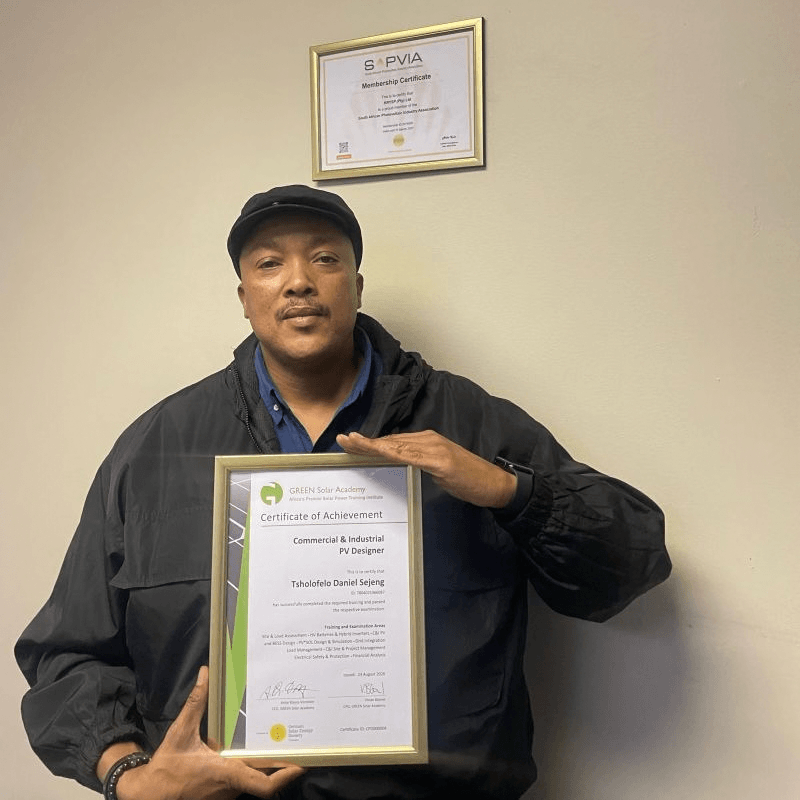
Danny should know. He built KRYSP up from small residential installations into a business taking on significantly larger commercial projects, and recently became a GREEN Certified C&I PV Designer.
Danny didn’t pursue C&I certification because he was new to commercial solar. He already had the knowledge and project experience. The certification gave him a formal way to demonstrate that capability, and another way to differentiate KRYSP when competing for commercial work.
That fits a pattern that runs throughout Danny’s journey: becoming better prepared than his current opportunities required – technically, professionally and as a business – so that when bigger opportunities arrived, he was ready to carry their weight.
So what can other solar professionals looking to move into commercial and industrial PV learn from his journey?
Danny’s blueprint is simple: Start where you are. Professionalise. Keep learning. Outgrow the level you’re in.
1. Go from the classroom to the roof
When Danny entered the solar industry, he actively sought out training wherever he could find it.
But learning wasn’t confined to the classroom.
He would learn, apply that knowledge on-site, encounter new problems and then go back to learn more.
“Go execute, learn, come back and learn more.”
That cycle built both his knowledge and his confidence.
2. Don’t wait for bigger projects to become more professional
This is perhaps Danny’s strongest advice for installers who want to move from residential into C&I: “The only way to promote yourself is to outgrow the level that you’re in.”
In other words, don’t wait until you win a commercial project before you start operating like a commercial professional.
Produce proper documentation on a small system. Take safety seriously. Follow the right registration and compliance processes. Give customers the information they need to understand their system.
Because moving up isn’t only about being able to design a bigger system. Your business has to be able to carry a bigger project.
As Danny puts it: “You don’t start being professional at the commercial level. You start where you are.”
That approach became part of KRYSP’s reputation. Customers referred new customers because of the quality of the work and the way projects were handled.
Same standards. Bigger responsibility. Able to delegate with confidence.
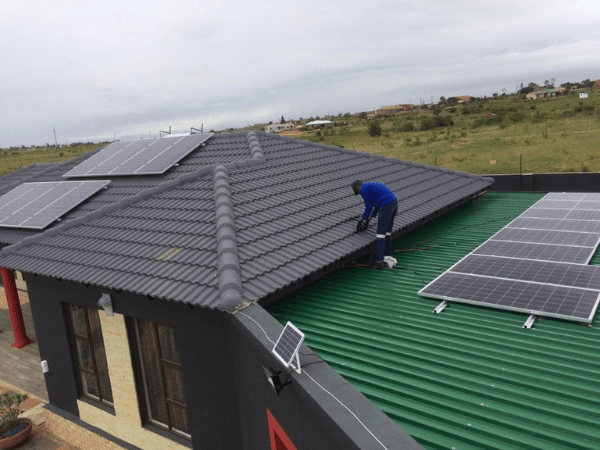
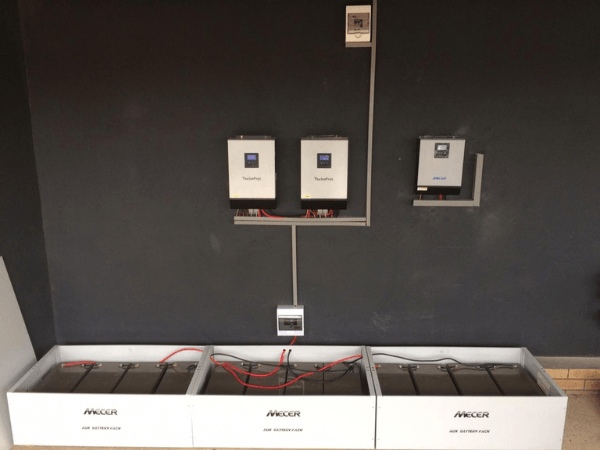
Above: 2019 Danny worked alongside his electrician Sphiwe Sharp on a 16-panel residential installation. At the time, Danny was teaching Sphiwe solar.
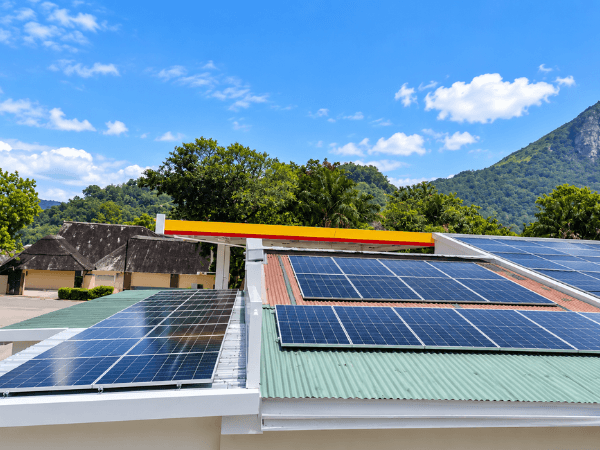
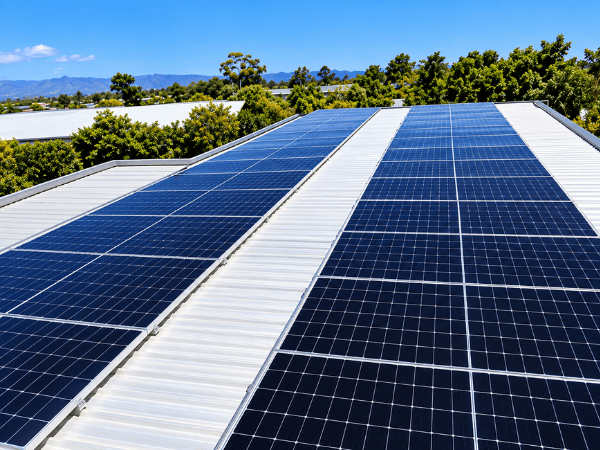
Above: 2025 Sphiwe Sharp, now a PV GreenCard installer, led a 50kW (left) and 20kW installation (right) for KRYSP Solar, without Danny on site.
3. Understand that C&I isn’t simply bigger residential
As the projects grow, so does the responsibility.
Danny points to poor design as one of the biggest risks when moving into larger systems.
Cable sizing becomes more critical. Structural loads need consideration. System components need to be verified against the design rather than simply accepted as part of a package.
And when a commercial design specifies a certain level of performance, there may be engineers and clients monitoring whether the system actually delivers it.
The cost of getting it wrong grows with the project.
4. Build proof of what you can do
Doing good work builds a track record. But what happens when you’re competing for a project against businesses with similar experience and credentials?
Danny has already seen this play out. For a recent school project, the tender requirements included the PV GreenCard and electrical contractor registration. Commercial PV design certification was listed as optional and beneficial.
Danny had recently earned his GREEN C&I PV Designer Certification. His project partner’s reaction? “This gives us a straight advantage on this job.”
Danny believes the certification contributed to their competitive position.
And he sees this becoming increasingly relevant as credentials such as the PV GreenCard and electrical contractor registration become more common among companies competing for commercial work.
Experience builds capability. Certification gives you a credible way to demonstrate it.
So, are you ready to outgrow your current level?
If you’ve built your foundation in PV and you’re ready to develop specialist commercial design capability, the GREEN C&I PV Designer Certification gives you a way to build on that experience and demonstrate what you can do.
Start with Commercial PV Design training.
